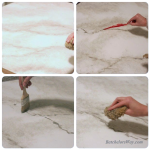
How do you paint over existing countertops?
As the experiences shared in this post show, there are many methods to paint countertops! (And yes, you really can paint laminate countertops.) Read the manufacturer instructions on your countertop painting kit or the paint and sealer you choose to use prior to beginning this project.
Ingredients
- Latex or acrylic paint in multiple colors
- Food-safe epoxy sealer
- Foam paint roller
- Paint brushes
- Sponge, rags, or other texture paint tools
Instructions
- Clean and prep the countertop. Since you'll be painting anyway, you can repair any major damage. You'll also remove the caulking. Be sure to scrub well and rinse off any cleaners. Use painter's tape to mask off any areas around the countertop.
- Sand the entire surface lightly with a rough grit sandpaper or sanding sponge. (An electric sander will be too powerful and take off too much of the finish.) Formica and laminate need a light sanding; granite and other stone surfaces will need a little more sanding to rough up the surface. Wipe the surface well after sanding.
- Apply one coat of primer to the countertop. We recommend using smooth foam roller when painting kitchen countertops.
- Apply the first coat of paint in the base color, again with a smooth paint roller and small paint brush. This will be the main color of your painted countertop. Apply a second coat, and a third if needed to cover the original countertop.
- Use a painting sponge or other tool to apply the additional paint colors in random patterns. The number of colors will depend on your kit and/or preferences.
- DIYers have used everything from an old rag and grocery bags for a quartz or granite patterned counter, to a small paint brush or even a feather for veins in a painted faux marble countertop.
- Apply the sealer/poly/topcoat to your countertops. Again, follow the manufacturer's instructions for use and especially for curing time.