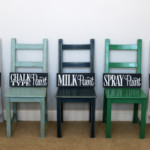
How to Paint Furniture
How to paint furniture using five different types of paint: latex, chalk, milk, spray and oil-based.Latex paint (also known as water-based or acrylic paint) is great because it is inexpensive and easy to clean up since it's water-based. New alkyd paints are also extra durable and require no poly or protective finish. Chalk paint doesn't require stripping, sanding or priming! It adheres to almost any surface, dries quickly and cleans up easily with soap and water. It even works on a bathroom vanity or kitchen cabinets.Milk paint does not require any prep work, has beautiful dimension being made from natural pigments and will soak in and act like durable stain on raw wood. BUT milk paint tends to chip if used on a piece with an existing finish, the results on a piece with an existing finish can be unpredictable, and milk paint's consistency makes it hard to control. Spray paint is quick and easy. It offers coverage without brush strokes and a very easy cleanup. Also, since spray paint is typically oil-based, it adheres well to most surfaces. It dries fast and is durable. However, it can get expensive if you have a large piece of furniture and it needs warmer temperatures to work correctly.Oil-based paint is very durable because of its hard shell. Its beautiful glossy finish adheres well to most surfaces. Oil-based paint requires a chemical clean-up since it is not water-based and it takes a long time to dry. I would plan on 24 hours per coat of paint. Because of this I usually find myself opting for other paint types.
Instructions
How to Paint Furniture with Latex Paint
- Sand. You must sand your furniture piece to remove some of the piece's current finish while creating a surface the paint can adhere to. A high grit sandpaper is a good option to give the surface some grip without removing too much of the previous finish.
- Clean. Give your piece a good cleaning. Use a damp rag to remove dust from sanding and any other dirt or grime. If needed, wash down the piece and use a cleaner like Simple Green.
- Prime. Priming before you paint with latex paint takes time, but it will be well worth it to ensure that the latex paint won't chip or peel.
- Paint. How the paint is applied will determine the look of the paint. Use a foam roller for a smoother look. Use a high-quality brush for places the roller won't reach.
- Seal. Seal latex paint with a water-based polyurethane protective finish, such as Polycrylic. It's water-based (like latex), and it should not yellow over time.
How to Paint Furniture with Chalk Paint
- Wash. To begin, I usually just wipe down a piece to remove any dust or dirt. I personally have never used a primer with chalk-type paint, but I would suggest it if the piece has a really glossy finish.
- Paint, at least 2 coats. Paint the entire piece with paint. I usually use a brush (but a small roller could come in hand for some pieces such as cabinets). You'll find that a little paint goes a long way, and I almost always use two coats of paint. Chalk-type paint dries really fast, but make sure the first coat is dry before applying the second.
- Clear Wax, then Dark, if desired. After the paint is completely dry, apply two coats of wax on the piece using a wax brush. I don't wait for the first coat of wax to dry before I apply the second coat. A tip when waxing, less is more!
- Dark Wax is optional. Use it if you want to bring out details and/or like the aged look. You must apply clear wax BEFORE you apply dark wax. Go easy on the dark wax. You won't need much! Apply the dark wax with a brush over somewhat dry clear wax.
- Remove excess wax with a lint-free cloth.
- You are not limited to using wax,. For high-use, high-touch pieces such as kitchen cabinets, table tops, desk tops, floors, and outdoor furniture, I would recommend a water-based polyurethane protective finish such as Polycrylic.
- Buff. Buff the wax using a lint-free cloth. It's pretty easy to see where you missed the wax, so you can easily touch those places up with a brush or rubbing wax in with your cloth. Buffing helps smooth out and remove extra wax.
- Sand. If desired, sand to give the piece an aged, worn, imperfect look. I recommend sanding after you apply the wax because of the chalk nature of chalk-type paint. It will make a mess if you sand before waxing and then you risk mixing the paint particles into the wax. I usually sand the edges and places where normal wear and tear would occur.
How to Paint Furniture with Milk Paint
- Mix. Milk paint comes in powdered form so requires mixing. It has an indefinite shelf life as a powder, however, once mixed the paint needs to be used fairly quickly. To mix, you add one part powder to one part paint. You can add more powder (or water) to get the consistency you prefer. Allow the paint to sit for a bit to allow the clumps to absorb water and help the bubbles to go away. Keep in mind that you will need to occasionally mix the paint from time to time since the powder will settle at the bottom.
- Paint. Milk Paint doesn't require prep work before you paint - no sanding or priming! Milk paint is thin and drips pretty easily. Use quick strokes and stay on top of the drips, wiping them as quickly as possible. Wait for each coat to dry before adding another. I usually do 3 coats of milk paint.
- Sand. After you're done painting, you can sand the piece. Sanding is great if you want to distress and smooth out the finish (you'll notice some powder lumps). If you have a lot of chipping, you'll want to smooth out these areas.
- Apply a finish: Wax, Oil, Polycrylic, etc. I use wax on my milk painted pieces then buff the wax using a lint-free cloth. It's pretty easy to see where you missed with the wax, so you can touch up those places with the brush or cloth. Buffing helps smooth out and remove extra wax.
- A water-based polyurethane protective finish such as Polycrylic is best for high-use pieces such as cabinets or desks. Oils are also an option. Hemp oil is a great because it's food safe.
How to Paint Furniture with Spray Paint
- Prep your Furniture Piece. Clean your furniture piece well and allow it to dry completely.
- Prep your Work Area and Yourself. Spray paint in a well-ventilated area. I use the garage with the door wide open. Use a large cloth to protect the floor. Wear a paint mask.
- Also, I suggest a spray paint attachment to keep your hands clean and minimize muscle cramping.
- Prep the Paint Can. Shake your can for several minutes. The first spray out of the can will often splatter. Aim the can away from the item you're painting, push down on the nozzle and start spraying.
- I often "practice" on a piece of cardboard to get the splatters out and to determine how fast or slow I should move the can.
- First Coat. Always start spraying just slightly away from your item. Smoothly but fairly quickly move the paint stream to your item, keeping it about 8 inches away. Move back and forth in a smooth rapid motion, painting a light coat.
- For multi-dimensional items, use short bursts of paint, always starting away from your item and finishing away from your item. It's tempting to spray a heavy coat, but that will mean drips!
- More Coats. Continue painting coats after the previous coat has dried. (Check the can for drying times. Keep in mind the lighter the coat, the quicker the dry time.)
- I typically spray paint a coat and go work on something else for a while. Once the coat has dried, you can add another. Do this until you have complete coverage.
- With spray painting, I rarely use a top coat unless there's a certain sheen I'm trying to achieve. A top coat will add another layer of durability but generally spray paint holds up well on it's own.
How to Paint Furniture with Oil-Based Paint
- Sand. Sanding before painting helps the paint adhere better. Use a high grit sand paper to rough up the surface without damaging it.
- Clean. Give the piece a good cleaning. Use a damp rag to remove dust from sanding and any other dirt or grime. If needed, wash down the piece and use a cleaner like Simple Green.
- Prime. With oil-based paint, you must use an oil-based primer. It will take more time, but I always suggest priming. It will be well worth your time and energy to have a piece that doesn't chip or peel.
- Paint. How the paint is applied will determine the look of the paint. Use a foam roller for a smooth look and a brush for a more rustic look.
- Seal. Seal oil-based paint with an oil-based finish.
Notes
